Extravafrench magazine (France) - ‘Streets of Paris’ review (translated) - August 12, 2026
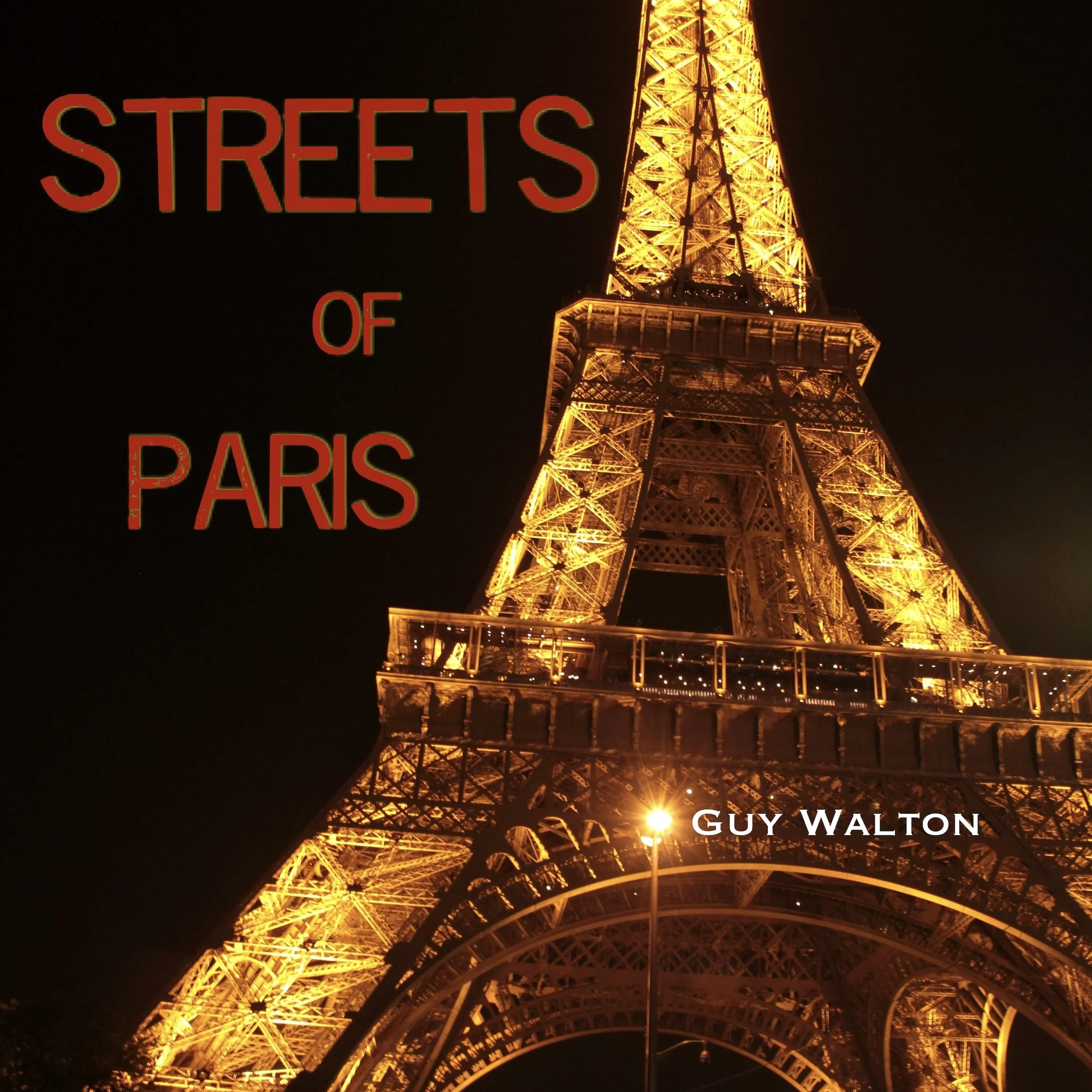
“With ‘Streets of Paris,’ Guy Walton delivers a tender declaration to the French capital, blending loving memories, travel impressions, and that particular melancholy of places one leaves without truly abandoning them.”
PARIS AFTER PARIS
You never quite return from a city you loved at the right time.
Long after the trip, sometimes all it takes is a facade glimpsed in a photograph, a snippet of French overheard in the street, or the memory of a light on the Seine for everything to come flooding back with almost unfair precision. Guy Walton seems to know this feeling. “Streets of Paris” doesn’t just tell the story of Paris: the Australian musician is primarily interested in what the city continues to evoke even after you’ve left it.
Inspired by his first stay in the French capital, the song is like a postcard you might have forgotten in your pocket before rediscovering it years later. The monuments fade into the background. What remains are the details, the pervasive romance, the feeling of having briefly lived in a slightly more cinematic version of his own life.
At the heart of this memory is the Quai Saint-Michel, associated with a moment significant enough to inspire Walton to speak a few words in French. The choice could easily have veered into the realm of a tourist postcard. Yet, it functions more as an emotional imprint: a foreign language retained because it has become inseparable from a specific feeling.
”Streets of Paris” already existed on the album “Crowded Moments.” For this new version, Guy Walton chose to re-record the track with a new vocal performance and a more elaborate atmospheric approach. This revisiting of a past song is interesting in itself. Revisiting a memory also means accepting that the person remembering it has changed.
The voice thus carries the piece with more detachment than naiveté. It doesn’t strive for absolute romantic emphasis. Walton seems more to contemplate his own attachment, as if the emotion has had time to lose its urgency and gain in precision.
This is probably what makes the title so compelling. Paris has been sung about ad nauseam. It’s almost impossible to evoke its streets, its quays, or its love affairs without venturing into territory already covered by hundreds of songs. Guy Walton doesn’t entirely escape certain familiar images, and “Streets of Paris” doesn’t, in fact, seek to deconstruct the Parisian myth. Its singularity stems rather from its outsider’s perspective: that of an Australian discovering a city whose imagery he likely already knew before he ever set foot on its cobblestones.
This distance produces a form of acknowledged wonder.
The composition prefers to accompany this feeling rather than overwhelm it. The atmosphere remains gentle and expansive without becoming bombastic, leaving enough room for the narrative to breathe. The improved soundscapes in this new version contribute precisely to this impression of space: more than just a sonic backdrop, Paris becomes a floating presence surrounding the song.
The song also seems to contain something quite true about travel. We often claim to remember places, when what we really remember is who we were when we were there.
Perhaps he is the one Guy Walton is really looking for throughout “Streets of Paris”.
The one who was walking along the Seine for the first time. The one for whom the Quai Saint-Michel held no personal history. The one who didn’t know that a seemingly ordinary moment would, a few years later, become important enough to warrant a song.
The songs release on July 14th certainly adds a nice symmetry to the project, but “Streets of Paris” is worth more than its French timing. It works because it speaks to a much more universal experience: falling in love with a place and realizing, once back home, that a part of us stayed there without asking permission.
Guy Walton is therefore not trying to write the definitive song about Paris. Thankfully.
He writes his own.
And in the end, the cities we keep the longest may never be those we know best, but those where we left behind a version of ourselves that we would sometimes like to find again.”
Review in French HERE (click the X in top RH corner to open the page)